Floating Forest
In April 2019, fire destroyed the roof and spire of Notre-Dame de Paris. Our entry to The People’s Notre-Dame Design Competition, which invited proposals for its reconstruction from around the world, was selected as a finalist and placed second. More than 200 designers from 56 countries took part, and some 30,000 people voted.
| Type | International competition entry |
| Year | 2019 |
| Location | Paris, France |
| Result | Finalist, 2nd place |
| Publication | Top 50 Visions of Notre-Dame, GoArchitect, 2019 |
Mujō
Everything in the world changes; nothing lasts forever. In Japan this is called mujō, impermanence. We accept the burning of the roof as part of that change, so we add nothing more than is needed: only the minimum, for the history and the future of the cathedral itself.
The frame
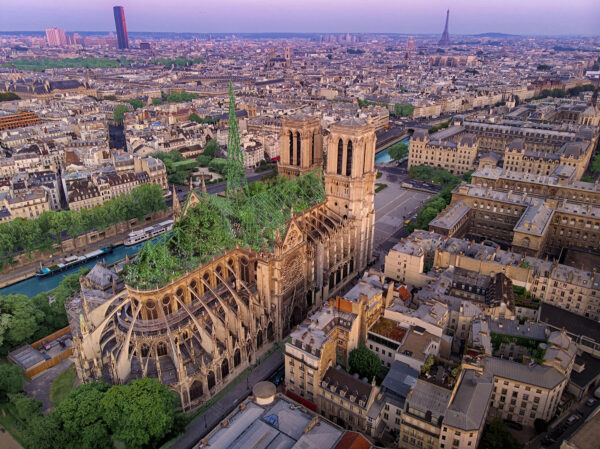
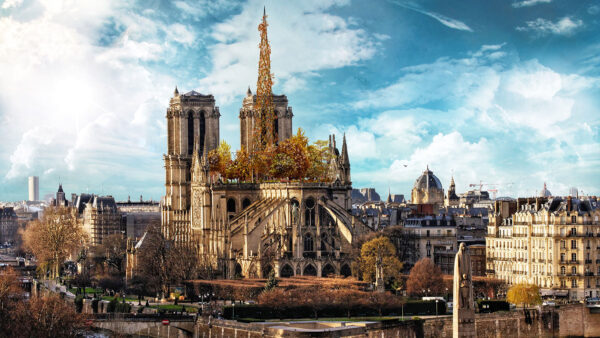
Instead of rebuilding the spire and roof as they were, only the metal structural frame is rebuilt. It is a homage, and a way that can be built with certainty. The fire reached about 1,200°C, while iron melts at about 1,538°C. The cathedral’s cross, which survived the fire, was made of a material with a melting point close to that of metal.
Floating Forest
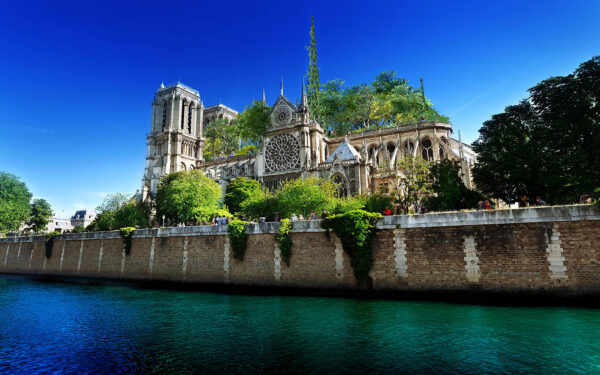
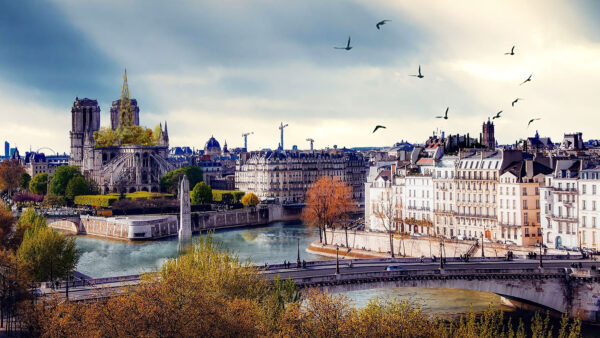
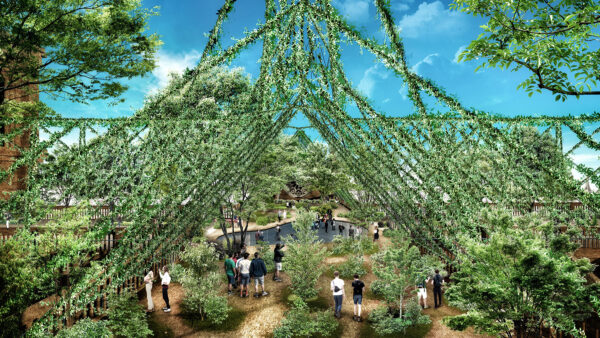
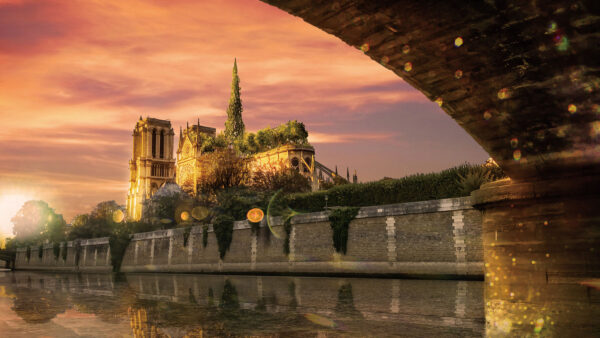
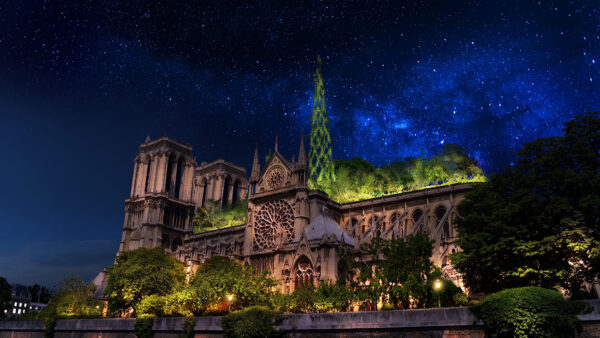
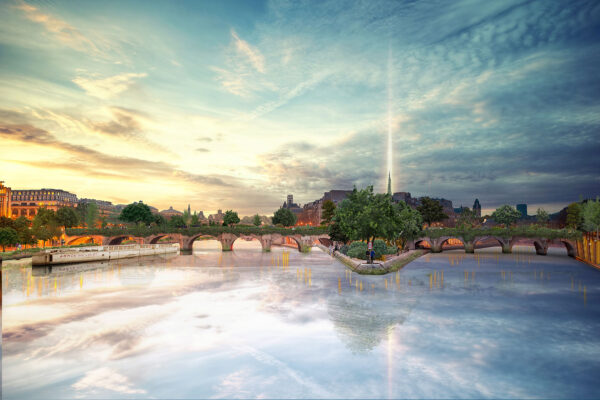
Over time the inherited frame turns green. The roof terrace becomes a Floating Forest that blends into the Paris sky and opens to people from all over the world, as a new Notre-Dame.
The hole
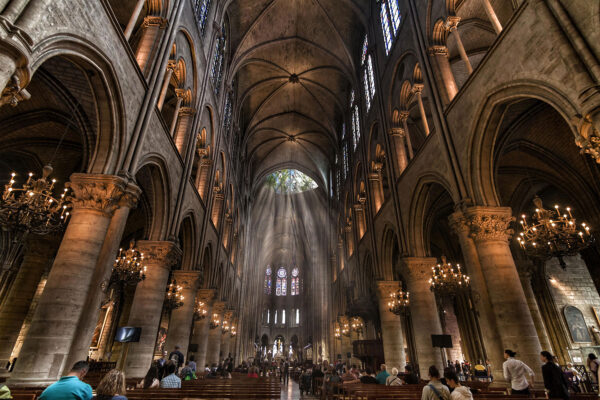
The hole left where the spire burned away is kept as a memory of the fire. Covered with glass against the rain, it can be walked around and looked into. To gaze into an empty hole is to think of what has disappeared, close to the gaze turned towards God inside a cathedral. Light falling through the greenery into the hole draws out the darkness within, creating a layered space that can only be felt by being there.
The void
The Île de la Cité, where the cathedral stands, is said to be where Paris began. The fire created an unexpected void there. The frame is Notre-Dame itself, the hole is what the fire left, and the Floating Forest marks its awakening. We keep the void that speaks of the origin of Paris, linking past, present and future, so that Notre-Dame may go on watching over the people of Paris as Our Lady.